Halloween is a magical time of year filled with superheroes, princesses, ghosts and goblins. But with all the excitement, it can also be a bit overwhelming and even dangerous for pets. Follow these Halloween dog and cat safety tips to keep the night fun and fright-free!
Spooky decorations can be tempting for curious cats and playful pups. Pumpkins and their seeds are technically non-toxic, but too much can upset your pet’s stomach. Colored corn cobs, cobwebs and small plastic decorations can become choking hazards or cause blockages if swallowed.
For safe Halloween vibes, swap out real candles in jack-o’-lanterns for battery-powered lights. Not only do they offer the same glow, but they also remove the risk of burns and fire hazards caused by excited pups and curious kitties. For a frightfully fun (and safe) home, use non-toxic paints and décor, avoiding glow sticks, cobwebs or dangling accessories that pets could chew or swallow.
One of the top cat safety Halloween tips is keeping your cat in a secure, quiet room during trick-or-treating. The constant doorbell, strangers in costumes and loud noises can be stressful. Help them feel safe by turning on the TV, playing calming music or running a fan for background noise.
Including your pup in dress-up and having them greet trick-or-treaters might sound fun, but when it comes to dogs and Halloween safety, it’s better to keep them away from the action. Costumes, noise and constant door-opening can easily overwhelm or startle even the most social dogs.
Keeping your pet safe behind closed doors provides a stress-free environment and helps prevent any chance of escape—because a frightened pet slipping out the door is the last kind of scary surprise you want.
When it comes to dogs and Halloween safety, candy is the biggest concern. Chocolate is toxic to pets and can cause vomiting, diarrhea and other serious effects if enough is eaten. Wrappers are also dangerous if swallowed. One of the most important Halloween dog safety tips is to avoid xylitol, a common sugar substitute found in sugar-free gum, candies and mints. Xylitol is extremely toxic to dogs and can cause dangerous drops in blood sugar and seizures.
If you suspect your dog or cat has eaten chocolate or candy, call your veterinarian right away or start a free Live Chat* with a licensed veterinary professional anytime through the myVCA™ app.
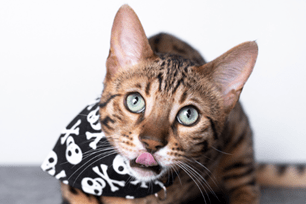
Pet costumes might look adorable, but they’re often uncomfortable and can block vision, tangle legs or become hazardous if chewed on and ingested. Instead of full outfits, opt for a festive collar, bandana or harness that keeps your pet safe and comfortable.
Taking your dog or cat along while going door-to-door may seem like a fun idea, but one of the best dog and cat and Halloween safety tips is to leave them at home. With so many strange lights, sights and sounds, your dog may become frightened. The same goes for cats—most would prefer to curl up in their safe space rather than join the spooky parade around the neighborhood. If your pet suffers from anxiety, talk to your veterinarian about natural remedies or supplements, like Feliway or Adaptil.
Black cats have long been associated with spooky folklore, including the superstition that they bring bad luck or curses to people they came close to. Despite the myths being outdated, suspicion of black cats is still found in some communities, making black cats and Halloween safety an especially important topic.
Far from being unlucky or spooky, black cats are warm, loving companions. This Halloween, the safest place for your black cat is indoors. With crowded streets, noisy activity and heavier traffic, the holiday can quickly become dangerous—especially for black cats, who can easily blend into the night.
By following these Halloween safety tips for pets, you’ll help ensure your furry friend enjoys a safe, cozy night, while you enjoy all the fun, candy and costumes!
*Live Chat with a licensed veterinary professional is free for VCA clients through the myVCA mobile app, available at Apple’s App Store and Google Play.