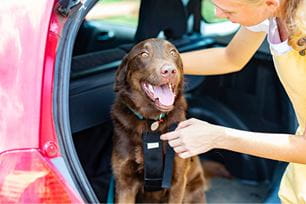
Summer vacation is almost here! The big question is, are you prepared to travel with your pet? Many summer vacations are well-suited to include your pet, but it’s important to consider a few things when preparing your road trip.
Here are 11 tips to help keep your road trip memorable and fun for everyone!
- Before you go, plan all accommodations in advance to know they are pet-friendly and will have room. Additionally, pets should not be left alone in the hotel room and never left in the car.
- On the road? The most important tip is to always use a pet restraint device or keep your pet in their crate while traveling.
a. Never let them ride in the front seat or on the driver’s lap. Front airbags are meant to work in conjunction with seatbelts to protect adult human passengers. Airbags and seatbelts weren’t designed with pet safety in mind and can cause serious injuries and death to our pets as well as in children.
b. Riding on the driver’s lap can also be extremely dangerous. Pets can get down around the pedals or block the view of the road, not to mention being a distraction to the driver.
- If you open windows in your vehicle for ventilation, don’t open them wide enough for your pet to put their whole head out of the window. Serious eye injuries can be caused by objects thrown up from the road into the air and your dog’s face, and pets don’t know well enough not to jump out of a moving vehicle.
- Always leash your pet before you open the vehicle doors to prevent your pet from dashing away. Make sure your pet is adequately identified in case you become separated. Microchipping is a permanent way for your pet to be identified, but it’s also a good idea to have an ID tag attached to their collar with your cell number. Be sure your microchip is currently registered and the contact information associated with the microchip is up to date.
- Bring enough food and water for the entire trip. Changes in diet can lead to gastrointestinal upset. Pack plenty of water to avoid problems with local or outdoor water supplies (e.g., Giardia and leptospirosis).
- Take frequent exercise breaks. Dogs need to take regular walks on road trips. Stopping at busy gas stations is not ideal, so try to plan your stops at rest areas or parks that are away from the rapidly moving traffic on the highway and where your dog can be leash-walked and go to the bathroom. Build extra time into your schedule for stops.
- If traveling with a cat, keep your cat inside a roomy pet carrier, and keep a small litter box in the pet carrier and scoop it frequently.
- Be sure to bring your pet’s routine medication(s), including flea, tick and heartworm preventives. Check with your veterinarian about any parasites in your destination area. Ticks may not be of concern in your hometown, but it may be a different story at your destination.
- If your pet is prone to car sickness or stress-induced diarrhea, speak to your veterinarian ahead of time for recommendations. They can give you tips or prescribe medication to help.
- Planning hikes? Build up your dog’s stamina before your travels. Hike early in the day when it’s cool, and plan paw protection for potentially rough or hot surfaces. Be sure to pack a collapsible water dish and plenty of water, stopping frequently for breaks.
- Take time for rest. Vacations can be hectic, so schedule some “down time” for you and your pet.
With a little planning and preparation, you can make great memories while vacationing with your pets this summer!
Questions about your pet? Have help whenever you need it with 24/7 Live Chat,* where our licensed veterinary professionals are always ready to answer your questions. Download the myVCA app. >>