World-Class Pet Care Resources

Answer: True
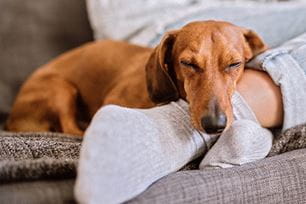
Your dog is curled up beside you and suddenly you see it—the paw twitch! Maybe you’ve seen your dog twitching their paws in their sleep and thought, “Ah, they’re chasing a squirrel or a rabbit!” But are dogs dreaming when they twitch in their sleep? Psychologists and veterinarians think so.
While we can’t ask our pets if they’re dreaming, scientists have learned that dogs go through similar brain-wave patterns as humans do during deep sleep. Pets also experience REM sleep—the same stage of sleep when we dream—meaning it’s likely our pets dream just as we do.
Interestingly, puppies and senior dogs tend to twitch more than middle-aged dogs. One theory is that the part of the brain that inhibits full muscle movement during REM sleep might be underdeveloped in young dogs or less efficient in older ones.
When an average-sized dog falls asleep, you may notice twitching begin about 20 minutes later. This is when their first dream episode often begins. You may also notice shallow or irregular breathing and eye movements behind their closed eyelids.
It’s normal to hear some funny sounds, like a yip or a whimper, as your dog sleeps and relives moments from their day! These sounds often go “paw-in-paw” with twitching while your dog sleeps. Likewise, when cats are asleep, they tend to move their heads as if they’re watching or following something, and they may be dreaming about hunting.
The next time you see your dog twitching in their sleep, don’t wake them! They’re just reliving the best parts of their day in dreamland, chasing squirrels or going on adventures with you.