World-Class Pet Care Resources


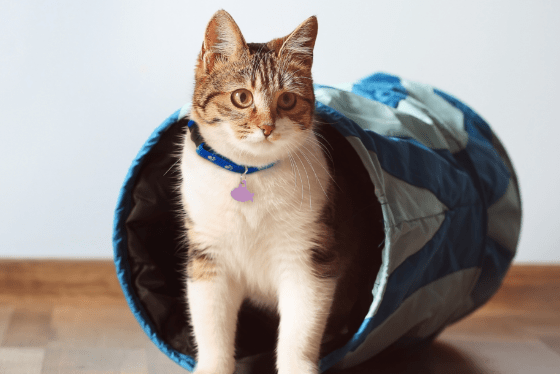
Cats make a variety of sounds, from hisses to purrs. But one sound, the meow, is mostly used in communication with people. So, what does a cat meow mean?
Your cat’s meow could mean several things:
Kittens and mother cats also meow at each other, which is sometimes called a mew. Once they get older, meowing is mostly used to talk with the cat’s humans.
Your cat can make a lot of other noises, too, and each of those noises has their own meaning. Learn more about caterwauling in cats.
Dog barks serve a variety of purposes in canine communication, and what a dog bark means depends on the specific scenario. Is your dog barking at you? Are they barking at a dog walking past the fence? Are they seemingly barking at nothing? You’ll have to consider your dog’s body language and the situation that’s causing the barking to decode what your dog is saying to you.
Your dog’s bark has a few potential meanings, such as:
Meowing and barking are normal parts of feline and canine communication, but your pet can also use these sounds to communicate when something is wrong.
Your cat’s meow could indicate that something is amiss if:
A cat who hasn’t been spayed or neutered may also meow and yowl more when seeking mates.
Your dog’s barking could be a sign that you should contact your veterinarian if:
It’s best to contact your VCA care team if you have any concerns about your pet’s vocalizations. Not only can they help you decode your pet’s language, but they can also rule out medical issues.
Learn more about how dogs communicate using body language. >>


*Covered services vary by plan. Unlimited exams exclude specialty and telemedicine exams. Plan includes (i) one Specialty Care consult at a participating VCA Specialty Hospital and (ii) one waived fee (up to $300) for an emergency or specialty consult at a participating BluePearl Pet Hospital, per year. Fees will apply for other services or products provided, including emergency stabilization, treatment, diagnostic tests, medications, and hospitalization. Plan pricing requires 12-month commitment.
CareClub Memberships are preventive pet health care plans and not pet insurance.
CareClub Membership covers only the selected health care services and products which are specifically identified in the applicable CareClub Membership agreement.
VCA Animal Hospitals, BluePearl Pet Hospitals, and Banfield Pet Hospitals are affiliates of Mars Inc.
**Live Chat with a licensed veterinary professional is free for VCA clients through the myVCA mobile app, available at Apple’s App Store and Google Play.
Free First Exam only for new clients (including those not seen in 3+ years) and eligible existing clients adding a new pet. Limit two pets (dogs or cats only) per household. The exam includes a status check on weight, nutrition and general health, parasite discussion, dental check and vaccination overview only. Not valid toward any other services including: any specialty, emergency, telemedicine and/or urgent care veterinary services; boarding or grooming services; any diagnostics or treatments; or any vaccines, medications or retail items. Not to be combined with any other offer. Redeemable only at the VCA Animal Hospitals location listed. For pet owners who are aged 18 and older. No cash value.
Florida Residents: THE PERSON RESPONSIBLE FOR PAYMENT HAS A RIGHT TO REFUSE TO PAY, CANCEL PAYMENT, OR BE REIMBURSED FOR PAYMENT FOR ANY OTHER SERVICE, EXAMINATION, OR TREATMENT THAT IS PERFORMED AS A RESULT OF AND WITHIN 72 HOURS OF RESPONDING TO THE ADVERTISEMENT FOR THE FREE, DISCOUNTED FEE, OR REDUCED FEE SERVICE, EXAMINATION OR TREATMENT.
NJ Residents: First Exam Regular Price Range: $75 to $150. NJ Licensee: Anthony Loomis, DVM.
Free First Dose offer valid for new patients receiving a qualifying initial exam at participating VCA Animal Hospitals. Offer applies only where an eligible parasite prevention product included in the program is prescribed and dispensed during the visit, as determined by the attending veterinarian. Eligible products only; not valid toward other products or services. Limit two pets (dogs or cats only) per household. Not combinable with other offers. Must be 18 years or older. No cash value.